lexi vs Lucio
A standardized, audit-grade view of features, pricing, use cases, and operational fit across these two legal ai platforms.
Parameters
2 solutions selected

Category
lexi
Lucio
Use Cases
lexi
Lucio
Overview
lexi
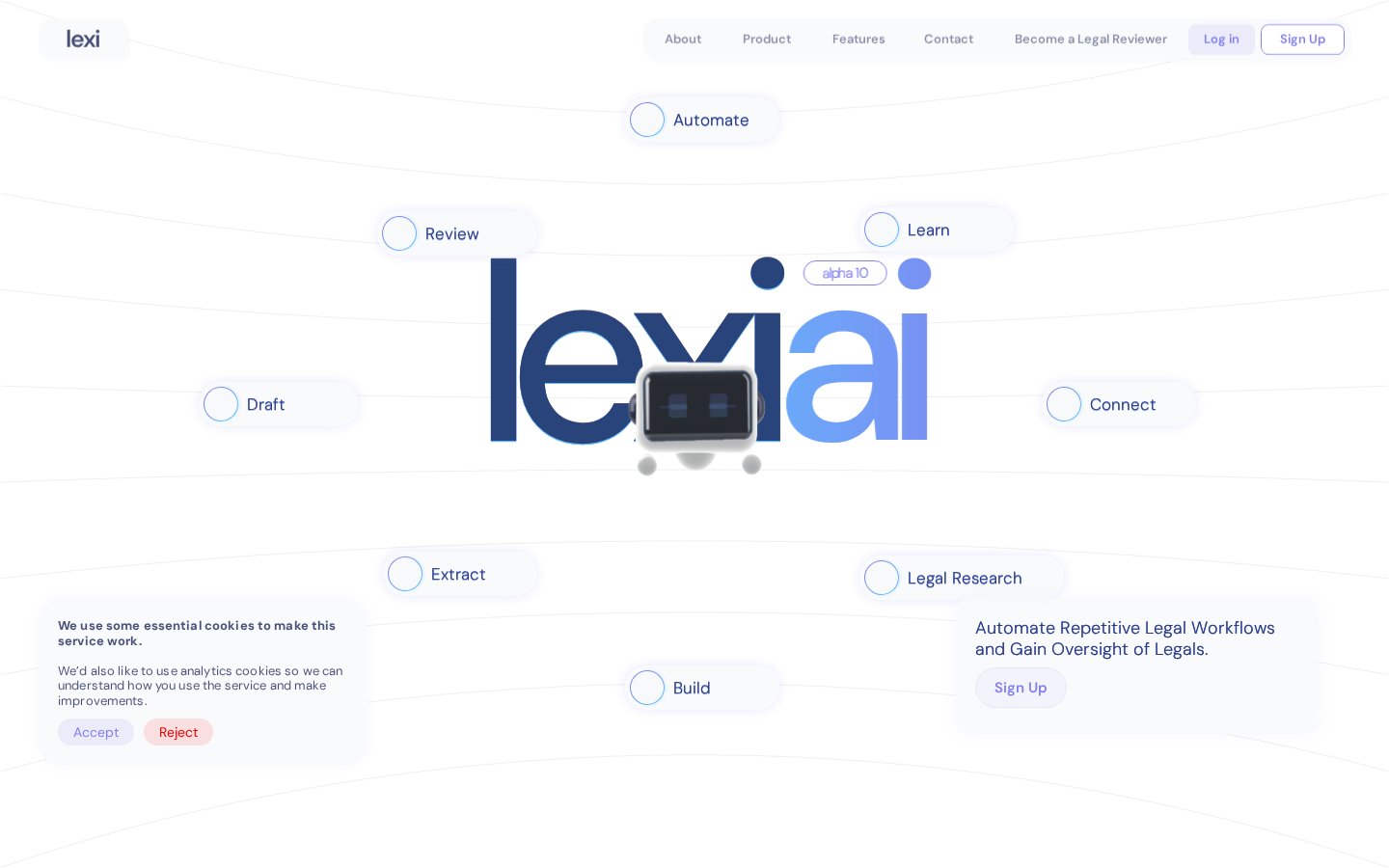
Lexi is an autonomous legal workflow agent, a legal AI product that automates legal drafting, reviewing, data extraction, visualisation, legal research and learning. It handles several repetitive legal tasks from one agent, such as drafting an employment contract, pulling data out of agreements and building dashboards from research findings. Its legal research covers thousands of cases in England and Wales, powered by the National Archive. The product is aimed at users who want to automate legal workflows and keep oversight of legal work, and it offers free learning modules on legal concepts.
Lucio
Lucio is a legal AI platform for research, document review and drafting, sold as one subscription that covers the Lucio Assistant, Lucio for Word and Lucio for Outlook. Every answer includes source citations so lawyers can check it quickly. It is best for law firm teams in disputes, corporate and regulatory work, and for in-house legal teams.
Tagline
lexi
One Agent to Manage Legal Needs.
Lucio
Legal AI built for precision, clarity, and control
Founded Year
lexi
—
Lucio
—
HQ Locations
lexi
Lucio
—Funding Stage
lexi
Seed
Lucio
—
lexi
—Lucio
help@lucioai.comWebsite
Founders
lexi
—
Lucio
—
Overview
Company Details
01. Core Features
Review
Automated legal document review capability.
Draft
Generate legal documents such as employment contracts.
Extract
Retrieve and extract data from agreements.
Automate
Automate repetitive legal workflows end-to-end.
Build
Create dashboards to visualise research findings.
Learn
Free learning modules for legal concepts.
Connect
Connect with legal professionals via reviewer network.
Legal Research
Search England and Wales cases via National Archive.
Lucio Assistant
Research, review and drafting in one AI workspace.
Lucio for Word
Draft contracts and generate redlines inside Microsoft Word.
Lucio for Outlook
Lucio's legal AI inside Outlook email.
Research
Searches the law, your databases and firm knowledge together.
Review
Upload and analyse large document sets with citations.
Drafting
Draft new contracts, amend existing ones, instant redlines.
02. Technical Specifications
03. Who is it for
04. Trust & Compliance
05. Pricing Details
Yes (site advertises 500,000 free tokens on sign-up)
Yes, pilot programs for select firms
06. Media

07. Recent movements
Recent movements
What lexi and Lucio have been up to
Launches, partnerships, funding and other news about these products from the last 6 months, by DreamLegal Research.
- LucioBuyer IntelligenceIn-house Counsels
Top 10 Legal Research Tools in 2026, Ranked by Buyer Interest
- LucioBuyer IntelligenceIn-house Counsels
Top 10 Contract Management Software in 2026, Ranked by Buyer Interest
- LucioBuyer IntelligenceIn-house Counsels
Top 10 Legal Research Software in 2026, Ranked by Buyer Interest
- LucioBuyer IntelligenceIn-house Counsels
Top 10 Legal AI Tools in 2026, Ranked by Buyer Interest
- LucioBuyer IntelligenceIn-house Counsels
Top 10 Legal Drafting Software in 2026, Ranked by Buyer Interest
- LucioBuyer IntelligenceIn-house Counsels
Top 10 Contract Review Software in 2026, Ranked by Buyer Interest
Contracts
Popular comparisons in contracts
Harvey AI vs Legora
Agents vs Legora aOS
Harvey AI vs Lucio
Agents vs Lucio Assistant
Coupa Contract Lifecycle Management (CLM) vs Harvey AI
AI Metadata Extraction & Clause Analysis vs Agents
Harvey AI vs Legora
Agents vs Legora aOS
Legal AIHarvey AI vs Lucio
Agents vs Lucio Assistant
Legal AICoupa Contract Lifecycle Management (CLM) vs Harvey AI
AI Metadata Extraction & Clause Analysis vs Agents
Contract Review & AnalysisFAQs
Our matrices are built by mapping every platform against 1,150+ standardized operational and security benchmarks, including SOC 2 and ISO 27001, and verified data protection claims. Paid placement never influences capability checkmarks or comparison scores.
No. Sponsored listings are clearly labeled and kept separate from our comparison scores. No vendor can pay to improve its ratings, checkmarks, or ranking position.
Our comparison data is refreshed monthly, so you're always evaluating platforms against their current features, pricing, and security posture.
We use a combination of vendor questionnaires, public documentation, security certifications, and direct testing. Where sources conflict, our team reviews and resolves discrepancies before publishing a score.
Yes. Custom comparisons tailored to your firm's size, practice area, and budget can be requested from your user account.