LEGAL AI

BRYTER's BEAMON AI: Bridging the Research-Action Gap in Legal Practice

Legal technology has reached an inflection point. While artificial intelligence tools proliferate across law firms and corporate legal departments, most remain isolated islands of functionality—capabl

20 June 2025 5 min readDreamLegal Research

Share article

BRYTER's BEAMON AI: Bridging the Research-Action Gap in Legal Practice

Legal technology has reached an inflection point. While artificial intelligence tools proliferate across law firms and corporate legal departments, most remain isolated islands of functionality—capable of generating drafts or answering questions but unable to execute complete workflows. BRYTER's BEAMON AI emerges as a response to this fragmentation, offering what the company terms "actionable AI" that connects research, analysis, and execution within a single platform.

The Fragmentation Problem

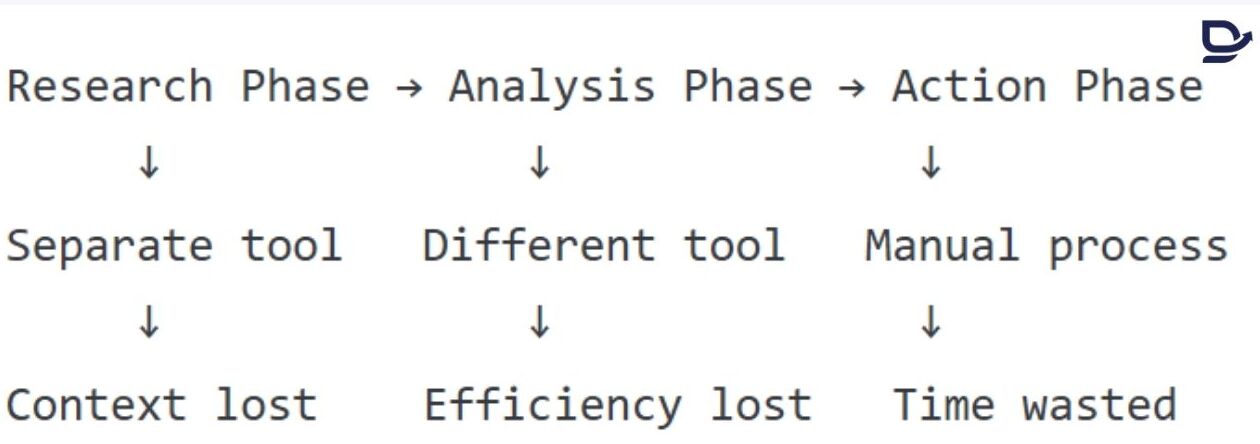
Legal professionals face a persistent challenge: their work requires seamless integration between research, analysis, and action, yet existing tools force them to operate in silos.

The Traditional Workflow Breakdown
Blog image

This disconnected approach creates friction at every transition point. A lawyer researching case law in one system must manually transfer insights to a drafting tool, then separately manage document workflows—each step introducing potential errors and delays.

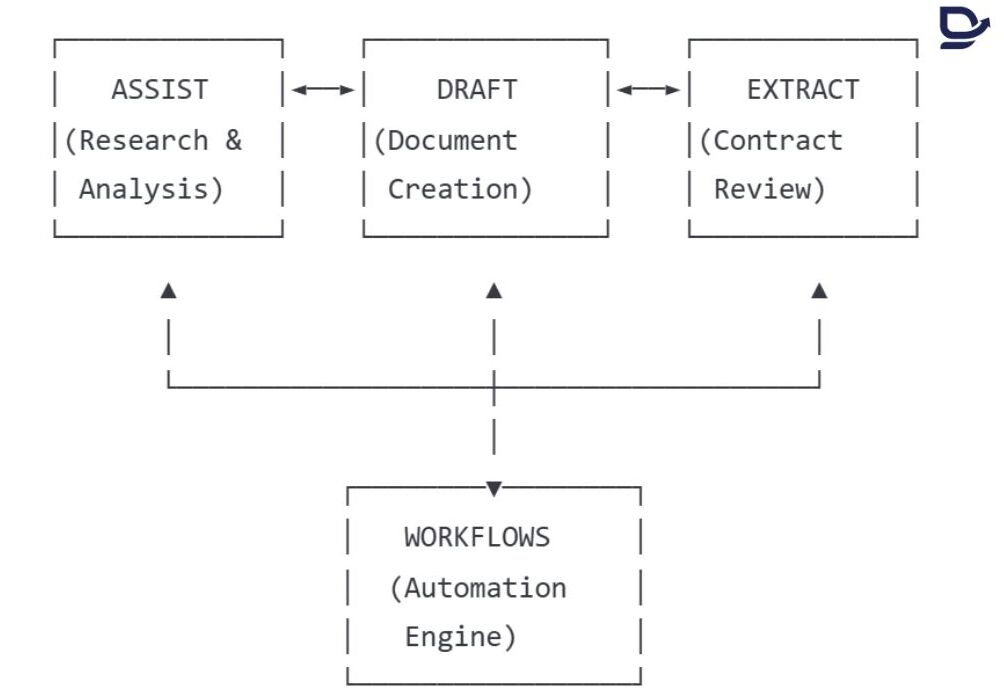
BEAMON's Integrated Architecture

BRYTER's solution centers on three interconnected components that maintain context throughout the legal workflow:
           

Blog image

Global Research Integration: A Strategic Response

BRYTER's recent addition of global legal research capabilities addresses a fundamental limitation in AI-powered legal tools. The integration spans 80+ databases across 20 jurisdictions, but more significantly, it embeds this research directly into active workflows.

Jurisdictional Coverage Spectrum

Core Markets: United States, United Kingdom, Germany, France Expanding Reach: Netherlands, Australia, Canada, plus 13 additional jurisdictions Strategic Partnership: Dr. Otto Schmidt Verlag (Germany) - first European AI assistant to achieve direct publisher integration

The Otto Schmidt partnership demonstrates BRYTER's commitment to depth over breadth, providing comprehensive coverage in German tax, corporate, compliance, and labor law rather than superficial access across multiple areas.

Real-World Implementation Scenarios

BRYTER's approach becomes clearer when examining specific use cases that traditional tools struggle to handle end-to-end:

Scenario Matrix

Claims Processing

  • Traditional: Research → Draft → Review → File (4 separate tools)

  • BEAMON: Automated pipeline with research integration

Cross-Border M&A Due Diligence

  • Traditional: Multiple jurisdiction research + separate document review

  • BEAMON: Unified platform with 20-jurisdiction legal database access

Contract Standardization

  • Traditional: Legal teams manually create templates → Send for review → Route through approval chains → Store in separate systems

  • BEAMON: AI analyzes existing contracts → Generates standardized templates with legal research citations → Automatically routes through predefined approval workflows → Integrates approved templates into document automation system

The Enterprise Adoption Signal

BEAMON's client roster reveals its positioning in the enterprise market. Organizations like Rakuten, McDonald's, Ashurst, and major consulting firms (Deloitte, PwC, KPMG) represent sophisticated legal operations that demand both innovation and reliability.

Adoption Pattern Analysis

Law Firms: Hausfeld, McDermott Will & Emery, Luther

  • Focus: Efficiency in client service delivery

  • Priority: Multi-jurisdictional capability

Corporate Legal Teams: Rakuten, McDonald's, Bertelsmann

  • Focus: Process standardization and cost control

  • Priority: Integration with existing enterprise systems

Professional Services: Deloitte, PwC, KPMG

  • Focus: Scalable client solutions

  • Priority: Workflow automation and quality assurance

Competitive Positioning

BRYTER's "workflow-first" approach distinguishes it from competitors who retrofitted automation onto existing AI chat interfaces. CEO Michael Grupp's observation that "it takes five years to build a strong workflow platform" while "it took us just a few quarters to build a copilot suite on top of it" reveals the company's strategic advantage.

Market Differentiation Framework

The legal AI market splits between two fundamental approaches, each with distinct strengths and limitations:

AI-First Platforms (ChatGPT-style legal tools)

  • Excel at conversational interactions and flexible content generation

  • Struggle with consistent outputs and process standardization

  • Require manual intervention to execute actions beyond drafting

  • Example: Generate a contract clause but cannot automatically route it for approval

Workflow-First Platforms (BRYTER's approach)

  • Prioritize predictable, repeatable processes with AI enhancement

  • Deliver consistent results suitable for enterprise governance requirements

  • Execute complete end-to-end processes without manual handoffs

  • Example: Generate contract clause, check against compliance standards, route for approval, and integrate into final document automatically

This architectural difference explains why BRYTER attracts enterprise clients requiring audit trails, compliance controls, and standardized outputs—areas where purely AI-driven tools often fall short of corporate governance requirements.

Technical Architecture Insights

BEAMON's multi-model approach deserves attention. Rather than relying on a single large language model, the platform selects optimal models based on specific tasks—a strategy that balances performance, cost, and accuracy considerations.

The system's ability to "stop where it doesn't know" represents a crucial safety feature often overlooked in AI legal tools. This restraint prevents fabricated legal citations and maintains professional standards.

Strategic Implications

BRYTER's trajectory suggests a broader shift in legal technology toward vertical specialization. The company's prediction that "the future of AI assistants is verticalization" aligns with market trends favoring purpose-built solutions over general-purpose tools.

The integration of research capabilities into BEAMON reflects what Grupp describes as "a slowly rising tide in the minimum required feature set" for AI legal assistants. This suggests that comprehensive legal research access may become table stakes for enterprise legal AI platforms.

Looking Forward

BRYTER's expansion plans include additional legal publisher partnerships, particularly in Europe, and continued enhancement of its free legal resource integrations. The company's partnership with the German Law Society (Deutscher Anwaltverein) demonstrates its commitment to professional legal communities beyond pure commercial relationships.

The success of BEAMON AI will ultimately depend on its ability to deliver on the promise of "actionable AI"—transforming legal research from an isolated activity into an integrated component of efficient legal workflows. Early adoption by sophisticated legal organizations suggests the market recognizes this integration imperative.

BRYTER's approach represents more than technological advancement; it embodies a fundamental rethinking of how legal work should flow in an AI-augmented environment. The platform's ability to maintain context across research, drafting, and execution phases positions it uniquely in a market increasingly demanding seamless, end-to-end legal technology solutions.

About BRYTER

Founded as a Berlin-based legal automation company, BRYTER operates globally with offices in London, New York, and Frankfurt. The company specializes in enterprise-grade legal software, serving international law firms, Fortune 500 in-house legal teams, and major professional services organizations. BRYTER combines AI capabilities with workflow automation to deliver what it terms "actionable AI" for legal professionals. The platform maintains SOC2 Type 2 and ISO 27001 certifications, ensuring enterprise security standards for sensitive legal operations.


Was this update helpful?

Sources

  1. 1
  2. 2
    Bryter Launches ‘Beamon AI’ – Legal Agent Suitehttps://www.artificiallawyer.com/2025/05/08/bryter-launches-beamon-ai-legal-agent-suite/
  3. 3
    BRYTER Adds Global Legal Research Capabilities to BEAMON AI Legal Assistanthttps://www.legaltechnologyhub.com/contents/bryter-adds-global-legal-research-capabilities-to-beamon-ai-legal-assistant/

Stay informed

Make your next legal technology decision with more clarity.

Join DreamLegal for independent research, market perspectives, and practical evaluation guidance for legal teams.

Create Free Account