LEGAL AI
India’s Supreme Court Sets AI Rules for Courts, Invites Public Comments
India's Supreme Court released draft regulations on June 3, 2026, governing how AI tools can be used across courts, with a public comment deadline of June 20. The regulations, prepared by the Supreme
Share article
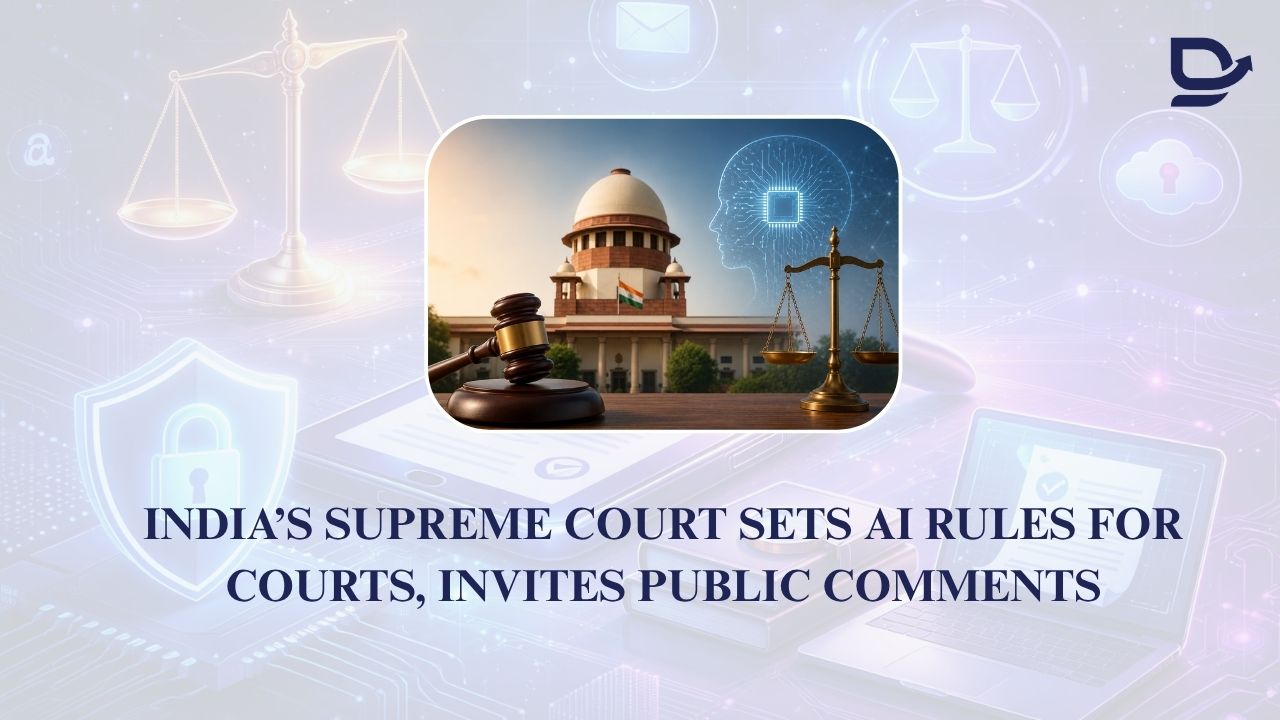
India's Supreme Court released draft regulations on June 3, 2026, governing how AI tools can be used across courts, with a public comment deadline of June 20.
The regulations, prepared by the Supreme Court's AI Committee, apply to every court in India, from the Supreme Court down to subordinate courts, tribunals, and statutory commissions. The framework permits AI for legal research, drafting, translation, transcription, and case management. It bars AI from deciding cases, passing sentences, or assessing bail eligibility.
This matters because India has one of the world's largest judicial backlogs, and these regulations set the first formal national framework defining what AI can and cannot do inside courtrooms.
What AI Can Be Used For
The draft lists over a dozen approved uses for AI in court processes:
Legal research and precedent retrieval
Citation verification
Summarising pleadings and judgments
Translating legal documents, orders, and pleadings
Automated transcription of court proceedings, subject to mandatory review by a designated officer
Drafting assistance and generation of prescribed formats
Preparation of notices, summons, and administrative documents
Cause list preparation and hearing scheduling
Case filing assistance and defect scrutiny
Record management and judicial resource allocation
AI-powered chatbots to help litigants access court services
Accessibility tools such as text-to-speech, speech-to-text, and Braille translation for persons with disabilities
Document authenticity verification and fraud detection in administrative processes, subject to mandatory human review
You have read your free article this month
Create a free account to keep reading. Members get unlimited research, saved comparisons and legal tech updates by email.
Already have an account? Sign in
Was this update helpful?
Sources
- 1Lawyers can use AI if...Supreme Court releases draft regulations for use of AI in courts, invites inputshttps://www.barandbench.com/news/lawyers-can-use-ai-ifsupreme-court-releases-draft-regulations-for-use-of-ai-in-courts-invites-inputs
- 2Supreme Court of India: Noticehttps://cdnbbsr.s3waas.gov.in/s3ec0490f1f4972d133619a60c30f3559e/uploads/2026/06/2026060342.pdf
Continue reading
Related articles
Legal AI
Wordsmith and Goodlawyer Combine AI Platform With Fractional Counsel Network
Read article
Legal AI
LexisNexis Bets on Practitioner-Consultants to Drive AI Adoption at Large Law Firms
LexisNexis hired former practicing attorney Bennett Blachar as a Legal Engineer on its Large Law Knowledge Management & Innovation team, effective October 1, 2026, signaling a deliberate push to close the gap between AI capability and courtroom-ready implementation.
Read article
Legal AI
TC Energy Goes All-In on Harvey AI, Signaling Enterprise Legal's Shift to AI-First Workflows
TC Energy, one of North America's largest energy infrastructure companies, has deployed Harvey AI across its entire legal department, spanning operations in Canada, the United States, and Mexico.
Read articleStay informed
Make your next legal technology decision with more clarity.
Join DreamLegal for independent research, market perspectives, and practical evaluation guidance for legal teams.
Create Free Account