CONTRACT LIFECYCLE MANAGEMENT (CLM)
LinkSquares Rebuilds OCR Engine to Sharpen Contract Data Extraction for AI Workflows
LinkSquares released a rebuilt Smart OCR engine on July 21, 2026, designed to produce cleaner, more structured contract text for downstream AI analysis, search, and data extraction.
Share article
LinkSquares released a rebuilt Smart OCR engine on July 21, 2026, designed to produce cleaner, more structured contract text for downstream AI analysis, search, and data extraction. The update targets a persistent bottleneck in contract lifecycle management: poor document parsing that degrades every subsequent AI-driven workflow.
LinkSquares, a Boston-based CLM platform, has positioned itself around AI-powered contract intelligence for mid-market and enterprise legal teams. The company's broader strategy centers on an agentic AI architecture, autonomous software agents that act on contract data rather than merely retrieving it. That ambition only works if the underlying text extraction is reliable. Scanned PDFs, multi-column layouts, tables, and exhibits have long been adversarial inputs for OCR systems. By rebuilding this foundational layer, LinkSquares is addressing data quality at the root, a problem the industry increasingly recognizes as the real constraint on legal AI performance, not model capability.
Chief Product Officer Andrew Leverone framed the rebuild as restoring accuracy to search and extraction across complex documents. The new engine preserves document hierarchy, contextual relationships between clauses, and structural elements that earlier OCR passes typically flattened. For customers, the immediate impact is cleaner metadata and more reliable clause-level tagging. For the competitive landscape, it signals that CLM vendors are investing engineering resources in preprocessing pipelines rather than relying solely on large language models to compensate for messy input. LinkSquares joins Docusign Intelligent Agreement Management and Ironclad's AI extraction tools in a race where data fidelity may determine which platforms deliver trustworthy contract intelligence at scale.
Industry Implications
Legal technology buyers have spent the past two years evaluating generative AI features layered onto contract platforms. Many have discovered that AI outputs are only as reliable as the document text feeding them. LinkSquares' decision to rebuild its OCR engine reflects a maturing market understanding: the competitive moat in legal AI is increasingly upstream, in document ingestion and structural parsing, not downstream in chatbot interfaces. Competitors across the CLM space will face pressure to audit and improve their own extraction pipelines. Enterprise legal operations teams evaluating platform contracts should prioritize OCR accuracy benchmarks and clause-extraction precision scores and not just AI feature lists when assessing vendor capabilities. This shift toward data-quality accountability is likely to reshape RFP criteria across the legal technology procurement cycle.
DreamLegal Perspective
Legal operations professionals should treat this as a signal to revisit their data quality assumptions. Before investing in advanced AI features like auto-redlining, obligation tracking, risk scoring, validate that your CLM platform accurately parses your actual contract portfolio, especially legacy documents, scanned agreements, and multi-party exhibits. Ask vendors for extraction accuracy metrics on your document types, not generic benchmarks. The platforms that win long-term enterprise adoption will be those that solve the unglamorous data problem first.
Was this update helpful?
Sources
- 1LinkSquares Advances Contract Intelligence with Rebuilt Smart OCR Enginehttps://blog.linksquares.com/advances-contract-intelligence-rebuilt-smart-ocr-engine
Products mentioned

Continue reading
Related articles
Contract Lifecycle Management (CLM)
Spellbook Launches End-to-End Autonomous Contract Management Platform
Read article
Contract Lifecycle Management (CLM)
OpenAI Taps Ironclad to Deploy Contract AI Agents Across Enterprise Legal Teams
Read article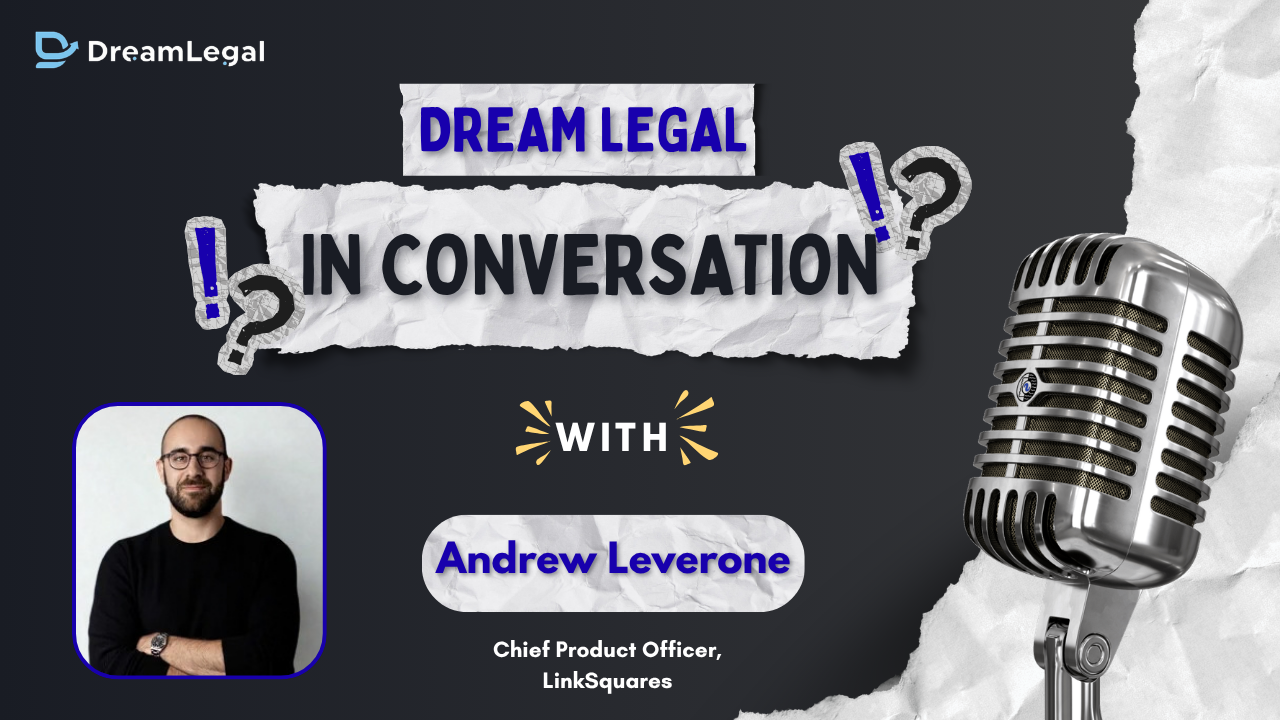
Contract Lifecycle Management (CLM)
DreamLegal: In Conversation with Andrew Leverone, Chief Product Officer at LinkSquares
LinkSquares recently introduced Workflow Builder Agent and Workflow Blueprints, two new capabilities designed to change how legal teams build and adapt contract workflows. We spoke with Andrew Leverone, Chief Product Officer at LinkSquares and a member of its founding team, to dig deeper into the thinking behind the launch.
Read articleStay informed
Make your next legal technology decision with more clarity.
Join DreamLegal for independent research, market perspectives, and practical evaluation guidance for legal teams.
Create Free Account