Carta vs Ledgy
A standardized, audit-grade view of features, pricing, use cases, and operational fit across these two equity management platforms.
Parameters
2 solutions selected


Category
Carta
Ledgy
Use Cases
Carta
Ledgy
Overview
Carta
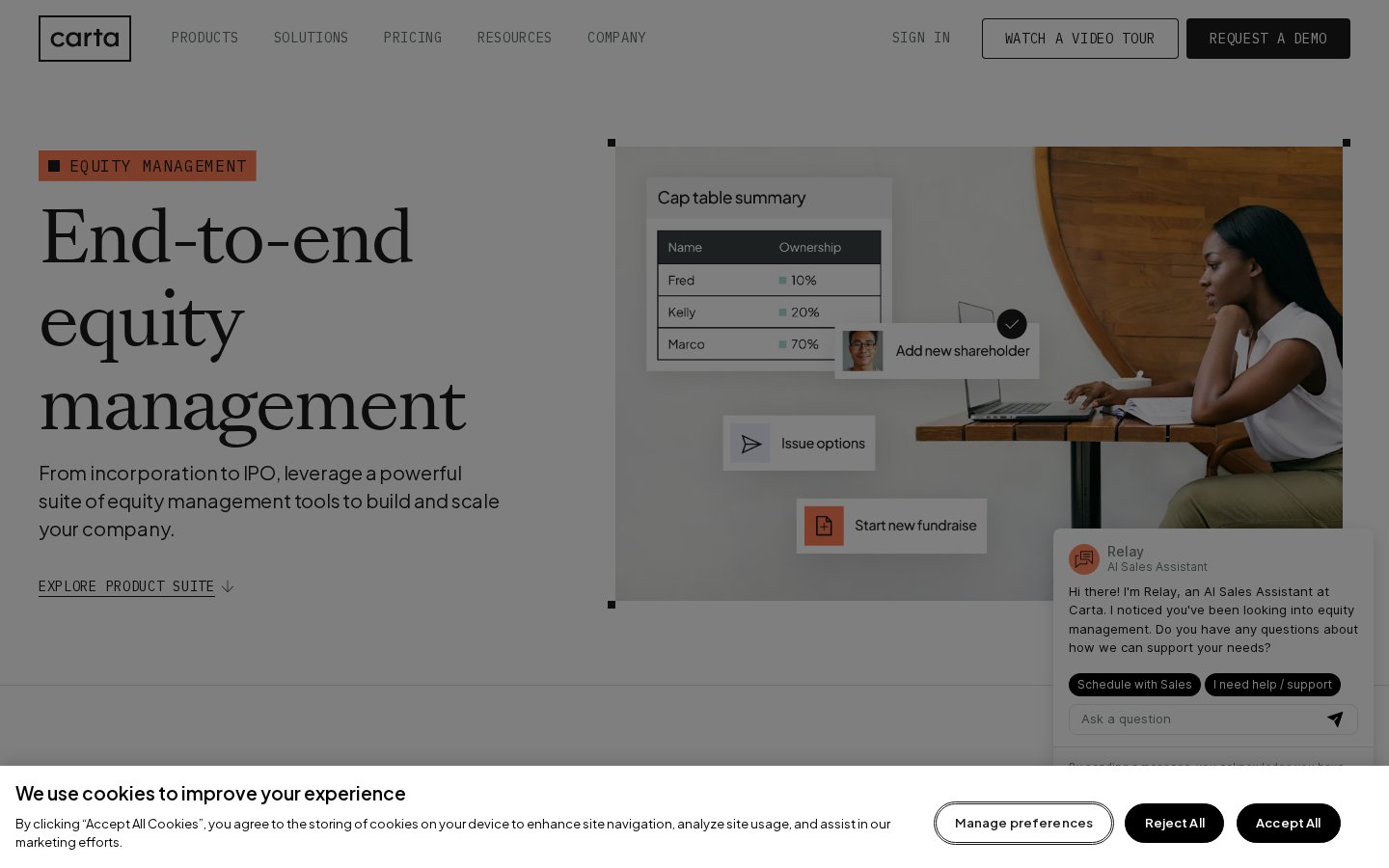
Carta is equity management software that lets companies issue, track and manage their securities from incorporation to IPO. Its cap table management sits alongside compensation benchmarks, employee equity advisory, tender offers, QSBS attestation and 409A valuations in one platform. It is aimed at founders, finance teams and the legal advisers who work with them, and early-stage founders can build their first cap table free with Carta Launch.
Ledgy
Ledgy is equity and executive compensation management software that brings equity, deferred compensation, carried interest, pensions and savings into one platform. It runs share plans, vesting schedules and performance conditions, lets employees exercise and trade shares, and produces financial reports. It is aimed at growing and listed companies, especially those with international share plans, and at their HR, finance, reward and company secretarial teams.
Tagline
Carta
Designed for founders. Built to scale.
Ledgy
Equity and executive compensation management, unified
Founded Year
Carta
—
Ledgy
—
HQ Locations
Carta
—Ledgy
—Funding Stage
Carta
—
Ledgy
—
Carta
—Ledgy
—Carta
—Ledgy
—Website
Founders
Carta
—
Ledgy
—
Overview
Company Details
01. Core Features
Cap Table Management
View, track and issue equity securely.
Total Compensation
Startup-specific compensation benchmarks.
Equity Advisory
Expert tax strategies for employee equity.
Liquidity
Run tender offers while controlling the cap table.
QSBS Attestation
Supports the QSBS tax exemption.
409A Valuations
Audit-ready 409A valuations.
Carta Launch
Free cap table for early-stage founders.
Share plan management
Automated workflows for running share plans.
Trading and settlement
Employees exercise and trade shares in one place.
Executive compensation
Equity, deferred compensation and carried interest together.
Vesting and performance conditions
Flexible schedules and tranche structures.
Financial reporting
Instantly generated reports for deadlines.
Employee engagement
Dashboards that explain grants and vesting.
02. Technical Specifications
03. Who is it for
04. Trust & Compliance
05. Pricing Details
06. Media
Corporate & Transactional
Popular comparisons in corporate & transactional
Jurisphere vs LegitQuest
Review Like Never Before vs LIBIL
LegalOn vs Kira
Assistant vs Kira
Lexsy vs Soxton
Lexsy Membership vs AI drafting, lawyer review
Jurisphere vs LegitQuest
Review Like Never Before vs LIBIL
Legal ResearchLegalOn vs Kira
Assistant vs Kira
Contract Review & AnalysisLexsy vs Soxton
Lexsy Membership vs AI drafting, lawyer review
AI-Native Law FirmsFAQs
Our matrices are built by mapping every platform against 1,150+ standardized operational and security benchmarks, including SOC 2 and ISO 27001, and verified data protection claims. Paid placement never influences capability checkmarks or comparison scores.
No. Sponsored listings are clearly labeled and kept separate from our comparison scores. No vendor can pay to improve its ratings, checkmarks, or ranking position.
Our comparison data is refreshed monthly, so you're always evaluating platforms against their current features, pricing, and security posture.
We use a combination of vendor questionnaires, public documentation, security certifications, and direct testing. Where sources conflict, our team reviews and resolves discrepancies before publishing a score.
Yes. Custom comparisons tailored to your firm's size, practice area, and budget can be requested from your user account.