LEGAL OPS ANALYTICS
Legal Tech Deal Drivers: What Actually Influences Buyers
Analysis of 214 legal tech transactions reveals internal references and clarity dominate purchase decisions, while traditional sales metrics like pricing transparency rank surprisingly low. Most deals
Share article
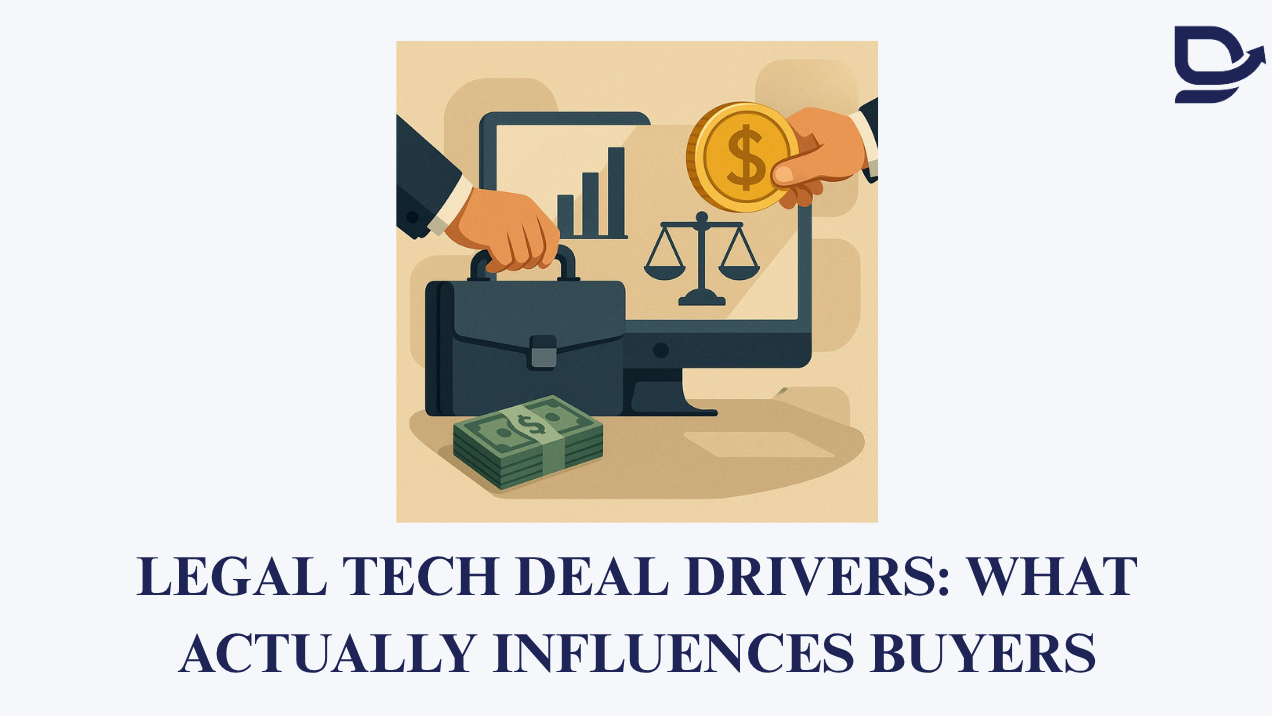
Analysis of 214 legal tech transactions reveals internal references and clarity dominate purchase decisions, while traditional sales metrics like pricing transparency rank surprisingly low. Most deals close through 3-4 combined influence factors rather than single decision drivers.
Trust Matters More Than Features
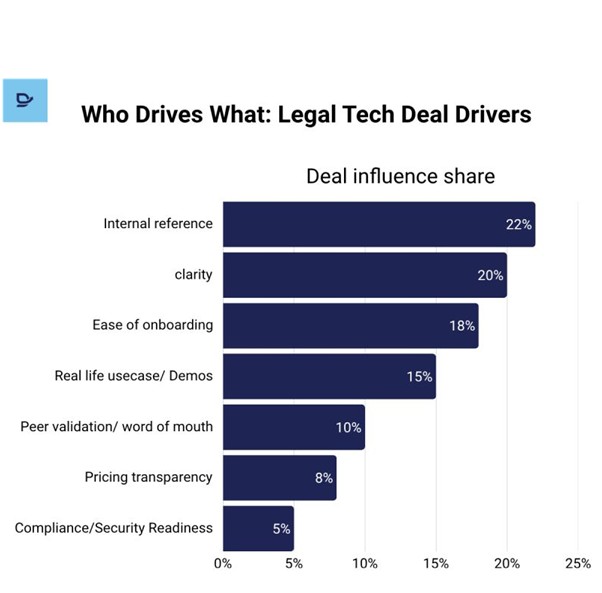
Internal references drive 22% of deal influence, making personal connections the strongest single factor in legal tech purchases. A mid-size law firm's recent adoption of contract management software exemplifies this trend—their General Counsel selected the platform primarily because she had successfully implemented it at her previous firm.
Clarity follows closely at 20% influence share, indicating buyers prioritize understanding exactly what they're purchasing over feature complexity. This suggests legal professionals prefer straightforward value propositions to technical specifications.
Implementation Concerns Override Price Sensitivity
Ease of onboarding accounts for 18% of deal influence, ranking third among decision factors. Legal teams consistently prioritize smooth implementation over cost considerations, with pricing transparency influencing only 8% of purchase decisions.
Create a free account to read this industry analysis
Industry analysis is free for members. It takes less than a minute to join.
Already have an account? Sign in
Was this update helpful?
Continue reading
Related articles
Legal Ops Analytics
Coheso Launches Memory to Convert In-House Legal Decisions into Reusable Institutional Knowledge
Read article
Legal Ops Analytics
Jalubro Adds David Lumsden to Board as AI Governance Platform Ephiria Targets Law Firm Control Gap
Read article
Legal Ops Analytics
DreamLegal: In Conversation with Mr. Ankit Kumar
In this interview of the Dream Legal podcast, the hosts speak with Mr. Ankit Kumar, who manages legal tech marketing in India for LexisNexis, on what makes marketing to the legal fraternity different from every other industry, the maturity of India's legal tech market, and why product, not networking, is what ultimately wins trust with lawyers and law firms.
Read articleStay informed
Make your next legal technology decision with more clarity.
Join DreamLegal for independent research, market perspectives, and practical evaluation guidance for legal teams.
Create Free Account